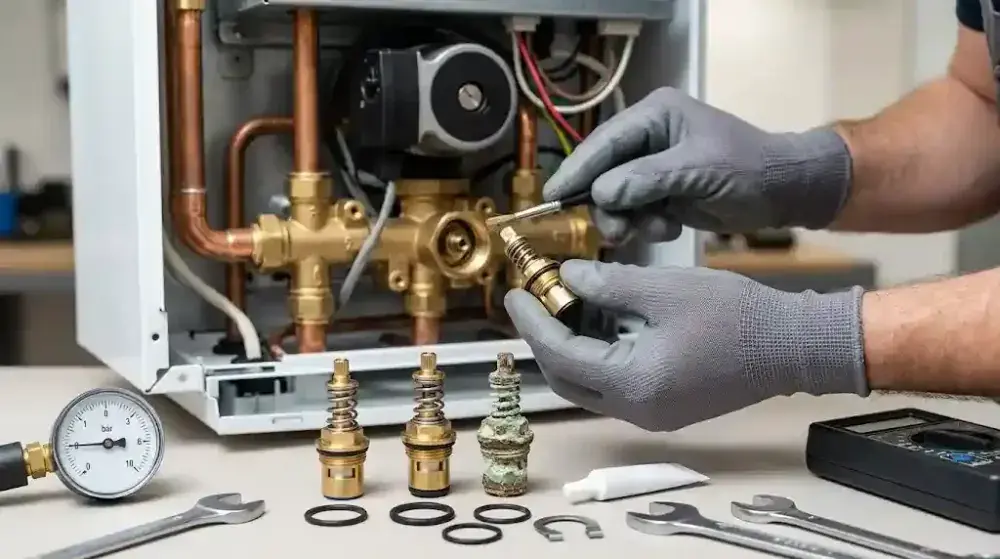
One of the most perplexing faults technicians encounter during winter is a combi boiler that fires up perfectly, yet the central heating radiators remain completely cold. In many instances, the root cause traces back to a small, hidden, but highly strategic component known as the boiler bypass valve. This part acts as a hydraulic short-circuit loop, designed exclusively to protect the circulation pump from destructive pressure loads. Understanding the mechanism of this spring-loaded safety valve is the golden key to accurate hydraulic diagnostics.
What is a Boiler Bypass Valve and Its Hydraulic Function?
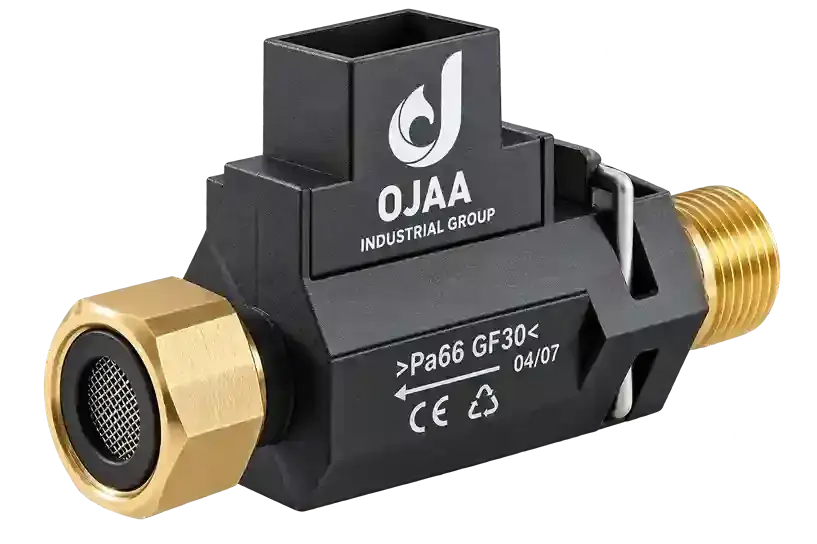
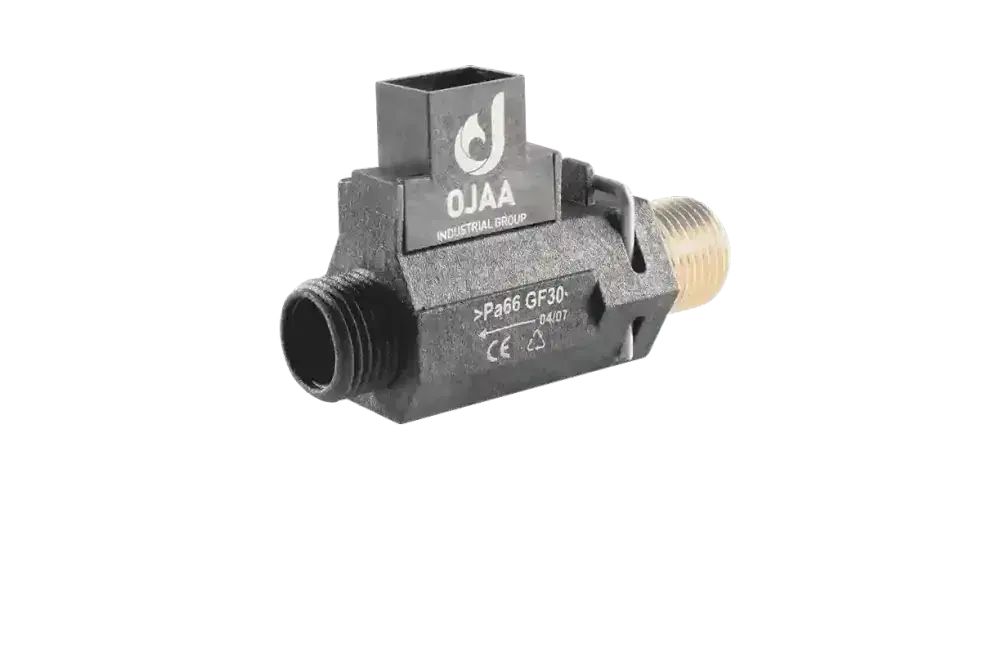
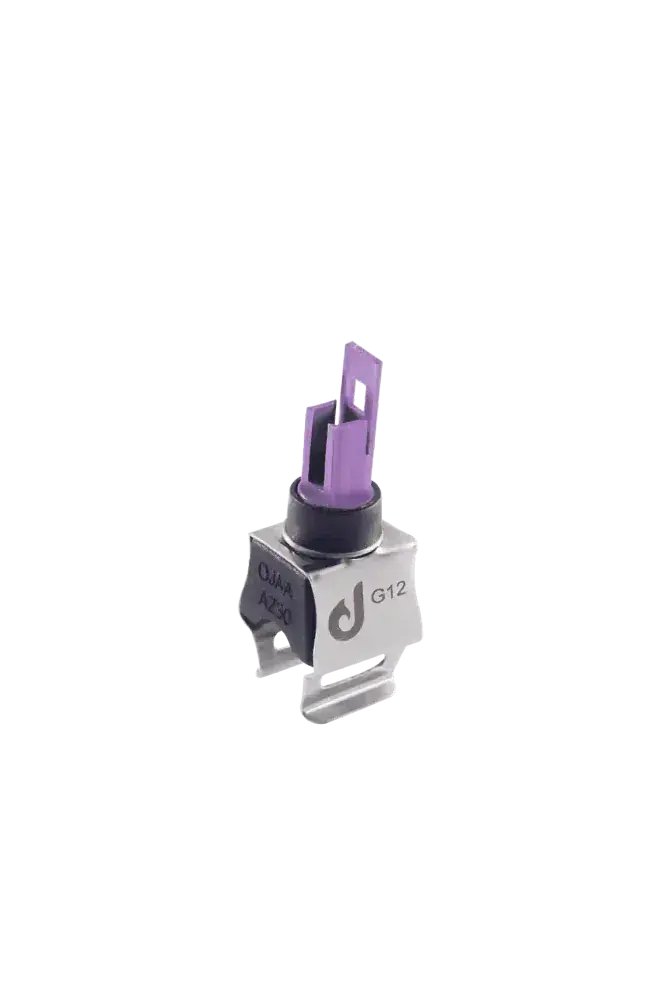
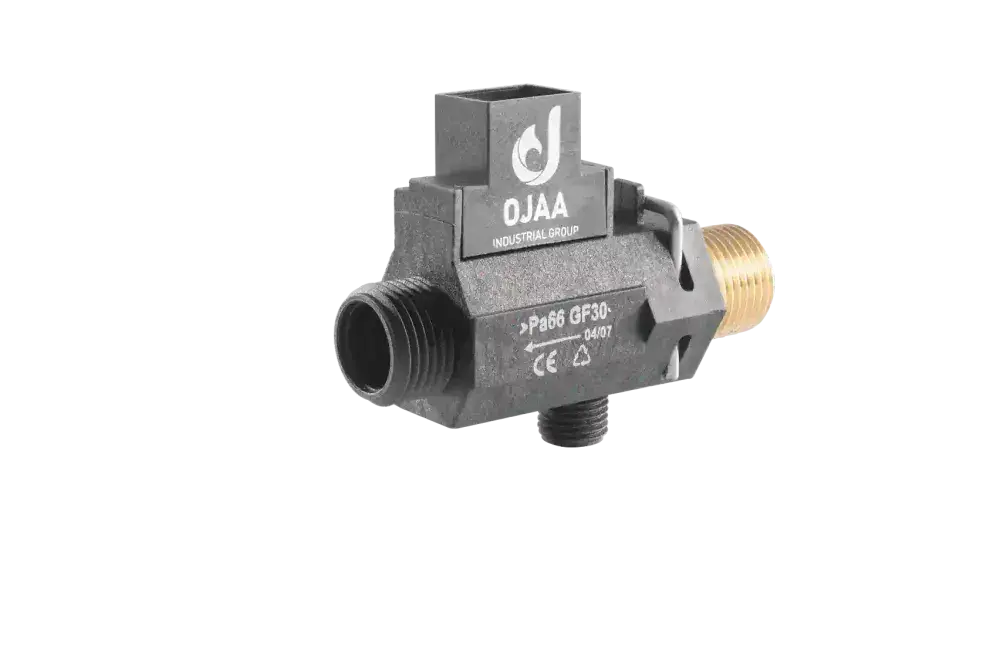
The boiler bypass valve (Automatic Bypass Valve or ABV) is a spring-loaded mechanical valve that creates an internal short-circuit pathway between the primary flow and return pipes, located entirely within the boiler casing. This component is engineered specifically to protect the circulation pump from a phenomenon known as "dead-heading. " Protection Against Blockages: If all radiator thermostatic valves (TRVs) close simultaneously, the pump attempts to force water against a solid blockage. At this critical moment, the hydraulic pressure overcomes the bypass spring, opening the valve and allowing water to safely circulate directly back to the pump. Preventing Pump Burnout: Opening this bypass circuit prevents the pump motor from drawing excessive amperage and burning out its stator coils due to extreme hydraulic resistance. Installation Location: In modern wall-hung combi boilers, the internal bypass is typically integrated directly into the return hydraulic manifold or the diverter valve housing.
Diagnosing a Boiler Bypass Valve Stuck Open
Physical breakage of this component is rare; the predominant issue is the valve's inability to reseal fully after it has opened. The accumulation of system sludge, magnetite, and limescale is the primary reason for a boiler bypass valve sticking. When this internal shortcut remains jammed open, it completely paralyzes the building's heat distribution system. Jammed in the Open Position: If debris becomes lodged beneath the rubber seating washer, the bypass remains permanently open. Since water always takes the path of least resistance, it circulates entirely inside the boiler rather than traveling through the extensive pipework to reach the radiators. Weakened Internal Spring: Over years of continuous thermal cycling, the calibrated spring loses its tension. A weak spring allows the valve to open prematurely at normal operating pressures, stealing hot water away from the heating circuit. Seized Closed: Conversely, if scale cements the valve completely shut, closing the radiator valves will force the circulation pump to operate against a closed system, leading to rapid cavitation and fatal motor failure.
Radiators Not Getting Hot: Symptoms of a Bypass Failure
A boiler bypass valve stuck open produces highly misleading symptoms that frequently trick inexperienced technicians into unnecessarily replacing the circulation pump or primary heat exchanger. To accurately diagnose this fault, technicians must physically monitor the flow and return pipes beneath the appliance. Radiators Not Getting Hot: Despite the burner running at maximum capacity and the pump functioning, the radiators (especially those furthest from the boiler) remain stone cold or barely tepid. Instantaneous Return Pipe Heating: If you touch the flow and return pipes immediately under the boiler and both become blisteringly hot at the exact same time (while radiators are cold), it confirms water is short-circuiting through the internal bypass. Rapid Short Cycling: Because the thermal energy is dumped into a tiny volume of water circulating only within the boiler, it reaches the target temperature in seconds. The PCB shuts off the burner, resulting in continuous, rapid short-cycling of the appliance.
Safe Workshop Checklist for Servicing the Bypass Cartridge
Repairing or unjamming this component requires careful dismantling of the brass or composite hydraulic block. Manually stretching the spring to increase its tension is a severe workshop error that destroys the valve's precise pressure calibration. To safely inspect and replace the bypass, adhere to the following steps: System Depressurization: Before removing the retaining U-clip or unthreading the bypass cap, isolate the electrical supply and use the manual drain valve to empty the heating circuit to exactly zero bar. Cleaning and Descaling: Extract the plastic or brass cartridge. Use a mild descaling solution to clean the debris from underneath the rubber washer, ensuring the seating area inside the manifold is perfectly smooth. Component Replacement: If the rubber O-rings are deformed or the internal spring is severely rusted, do not attempt a repair. Replace the entire bypass cartridge with a genuine OEM part, lubricating the seals with pure silicone grease.
Final Summary
The combi boiler internal bypass is a hidden hydraulic guardian that guarantees the longevity of the circulation pump against system blockages. Severe issues such as rapid short-cycling and radiators not getting hot during winter are directly caused by a boiler bypass valve stuck open. Technicians must utilize physical pipe temperature checks to identify this short-circuit flow. After completely depressurizing the system, cleaning or replacing the bypass cartridge and its O-rings will restore normal hydraulic resistance and bring the building's heating back to standard operation.