The beating heart of any closed-loop heating system is the boiler circulation pump. This critical electromechanical component is responsible for transferring the thermal energy generated in the burner directly to the radiators or the secondary plate heat exchanger. A sudden cessation of this flow causes the primary water to boil instantly, locking out the entire appliance. Mastering the ability to differentiate between a mechanical jam and an electrical failure prevents the unnecessary and costly replacement of this highly expensive part.
What is a Boiler Circulation Pump and How Does a Wet Rotor Work?
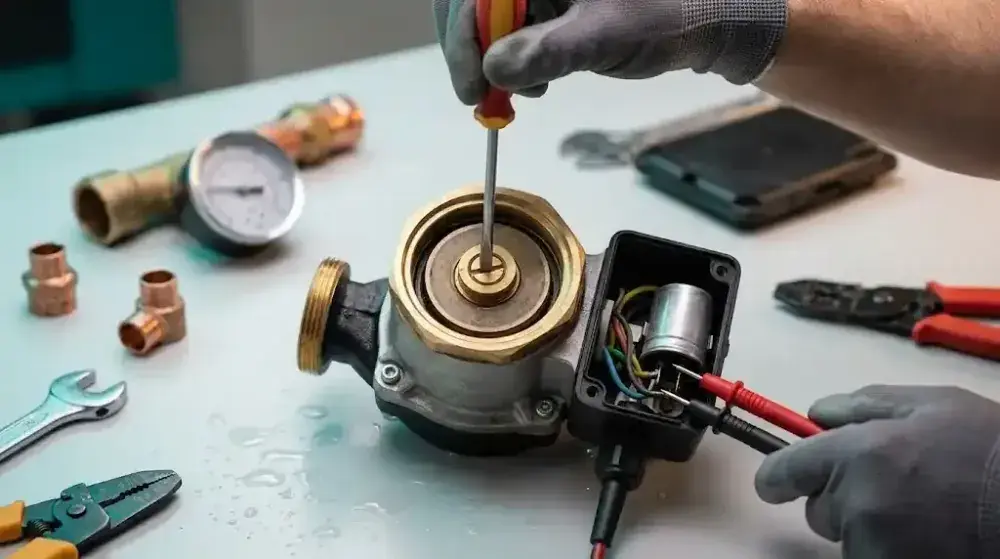
A boiler circulation pump is an electric motor featuring a Wet Rotor design, positioned directly on the return pathway of the hydraulic block. In this specific architecture, the central heating water flows directly inside the rotor chamber, performing the essential duties of cooling the motor coils and lubricating the ceramic bearings. This design completely eliminates the need for external lubrication, but it makes the motor highly susceptible to water quality issues. Core Components: The assembly includes the electrical stator (windings), a magnetic rotor, a composite impeller, a terminal box housing the starting capacitor, and a central brass bleed screw. Speed Regulation: Modern central heating pumps feature a speed selector switch (usually 3-speed) allowing technicians to adjust the flow rate and dynamic head according to the building's pipework resistance. Safety Interlock: The operation of the pump is logically linked to the water pressure switch. If system pressure drops, the PCB cuts power to the motor to prevent catastrophic dry running.
Diagnosing Pump Seizing, Jamming, and Abnormal Noises
One of the most frequent faults encountered after the boiler's summer resting period is pump seizing. In this scenario, the PCB sends the 230V command, and the motor emits a low hum, but the impeller is physically unable to rotate. Accurately identifying the root cause of the jammed shaft or strange noises is the first step in remediation. Physical Jamming (Seizing): Over long periods of inactivity, magnetic black sludge (magnetite) and scale settle in the millimeter-tight clearance between the rotor and stator, cementing the shaft in place. Cavitation and Air Locks: If trapped air is not bled from the system, air bubbles strike the spinning impeller at high speeds, creating a violent rattling noise identical to gravel circulating inside the volute. Bearing Wear: Running the unit without sufficient water pressure destroys the protective fluid film around the ceramic shaft, eventually leading to severe rotor play and metal-on-metal grinding noises.
Capacitor Failure Symptoms and Electrical Motor Testing
If the central pump shaft rotates freely and smoothly by hand but the motor still fails to initiate, the problem lies within the terminal box—specifically, a boiler pump capacitor failure. The capacitor provides the initial electrical torque required to overcome the rotor's resting inertia. Testing the electrical integrity of the motor mandates strict adherence to workshop safety protocols. Capacitance Degradation: Swelling or leaking dielectric fluid causes the capacitor to lose its microfarad (μF) rating. The motor will grow extremely hot to the touch but will not spin. Safe Capacitor Testing: After completely isolating the mains power, discharge the capacitor safely. Use a digital multimeter set to the capacitance function to verify that the reading matches the label (e. g. , 2. 5μF). Winding Continuity: Set the multimeter to the ohmmeter function and measure resistance across the live and neutral pins of the stator. A reading of zero (short circuit) or infinity (open circuit) confirms the motor coils have burnt out.
Workshop Checklist for Unjamming and Bleeding Air
In many breakdown scenarios, the motor does not need replacement; a simple mechanical service restores full hydraulic circulation. Bleeding air from the pump is a mandatory commissioning step whenever the system is drained and refilled. Execute the following steps to clear blockages and purge trapped air: Accessing the Shaft: Place an absorbent cloth beneath the hydraulic block. Use a flathead screwdriver to carefully unscrew the large silver or brass bleed plug located in the center of the pump head. Freeing the Rotor: Insert the screwdriver directly into the slot at the end of the exposed shaft. Turn it gently but firmly clockwise and anti-clockwise to break the limescale bond until it spins freely. Purging Trapped Air: Allow the appliance to fire up for a few seconds. Trapped air bubbles and a trickle of water will escape from the central port. Once the flow is clear, retighten the plug without applying excessive force.
Final Summary
The boiler circulation pump is the driving force of thermal distribution across both the central heating and domestic hot water circuits. Excessive noise, an overheating motor casing, and rapid boiling faults are primary indicators of rotor seizing or a failed starting capacitor. Before condemning this costly component, technicians must always attempt mechanical unjamming and air bleeding. If the shaft spins smoothly, investigating the capacitor's microfarad rating with a multimeter is the definitive step to prevent misdiagnosis.