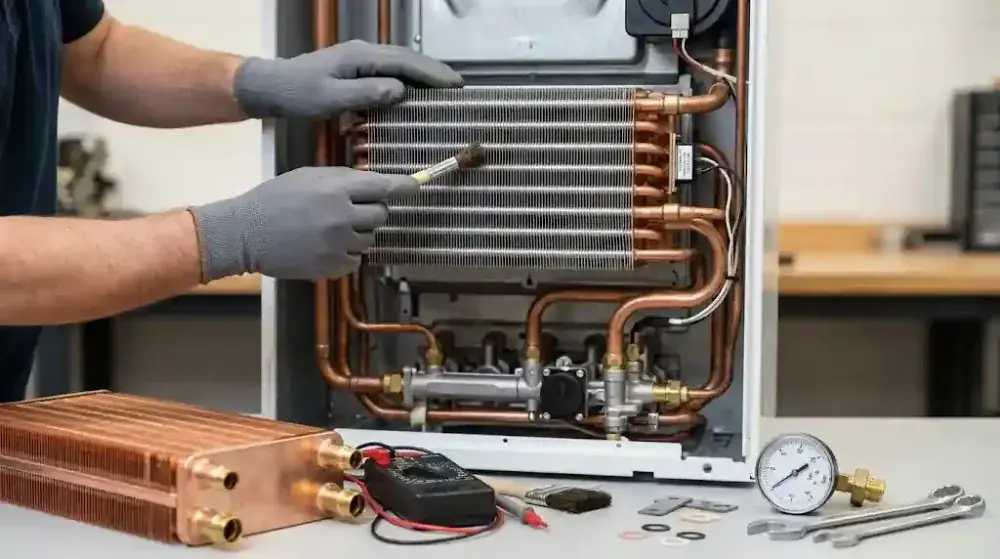
The central core of thermal production in any gas-fired combi boiler is a massive, highly engineered component known as the boiler primary heat exchanger. Positioned directly above the burner within the sealed combustion chamber, it absorbs the intense thermal energy from the flame and transfers it to the circulating fluid. Understanding its architecture and diagnosing efficiency drops caused by internal limescale scaling prevents costly component failures and dangerous incomplete combustion scenarios.
What is a Boiler Primary Heat Exchanger and How Do Copper Fins Work?
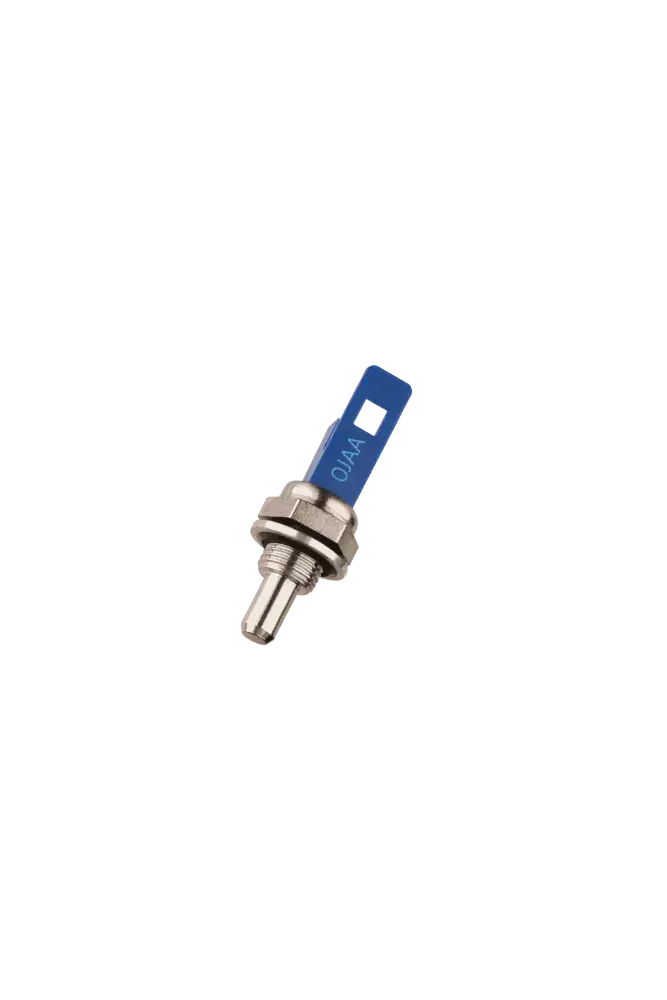
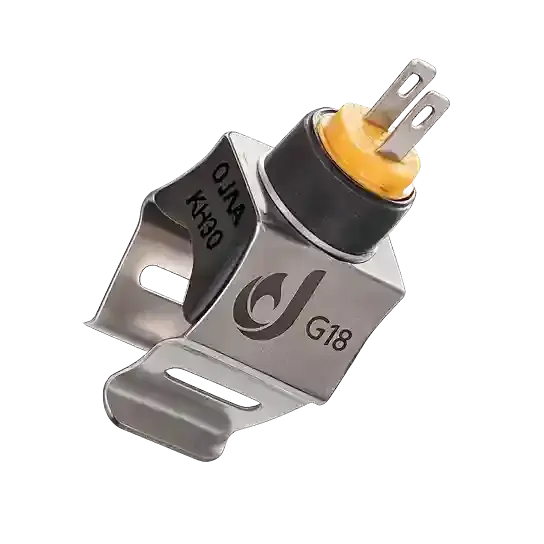
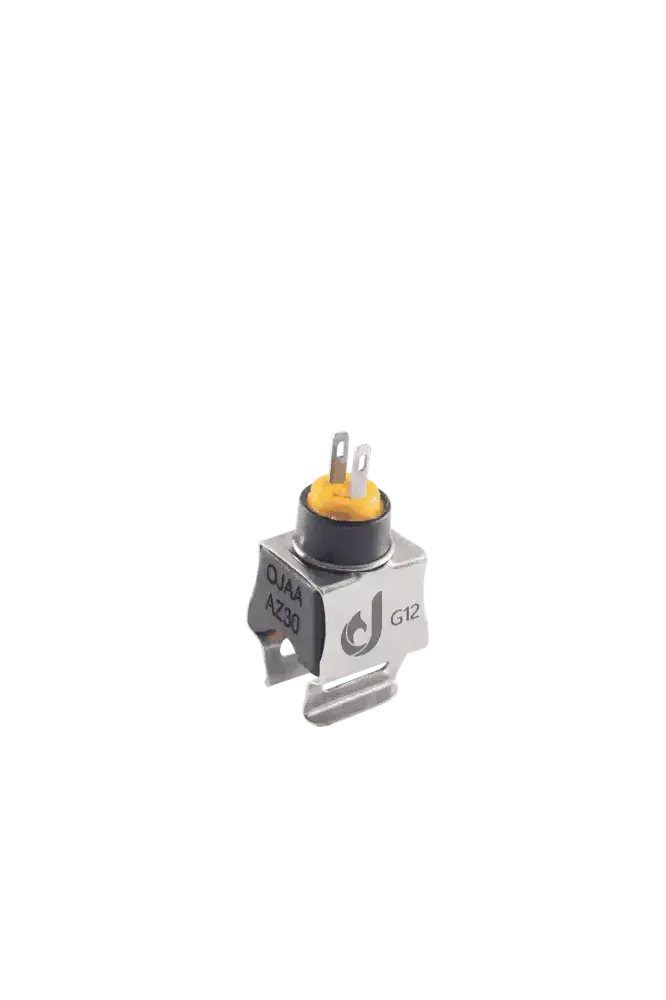
A boiler primary heat exchanger is a specialized radiator network, traditionally constructed from high-grade copper or modern aluminum-silicon alloys, through which the central heating water circulates. To maximize the surface area exposed to the flame and hot flue gases, a specific architectural design is employed. Heat-Absorbing Fins: The primary water tubes are surrounded by hundreds of thin copper plates (fins). These fins absorb the raw heat of the burner flame and rapidly conduct it into the circulating fluid. Anti-Oxidation Coating: The exterior of copper heat exchangers is coated with a high-temperature silver aluminum paint to protect the metal from the direct, oxidizing effects of the flame and acidic combustion condensates. Thermal Safety Interlocks: The overheat high-limit thermostat and primary NTC sensors are mounted directly on the outlet pipes of this component to shut off the gas immediately if the fins risk melting due to poor water circulation.
Mono-Thermic vs Bi-Thermic Heat Exchanger Designs
In wall-hung boiler engineering, primary heat exchangers are divided into two distinct families based on whether the appliance utilizes a secondary plate heat exchanger and a diverter valve. Technicians must fully understand the hydraulic differences between these two technologies during servicing. Mono-Thermic Heat Exchangers: This design features a single internal waterway dedicated solely to the central heating circuit. Generating domestic hot water requires a diverter valve routing this primary water through a separate secondary plate heat exchanger. Mono-thermic units scale up much slower. Bi-Thermic Heat Exchangers: Also known as twin-pass or coaxial heat exchangers, these feature a "tube-in-tube" design. The outer tube carries central heating water, while the inner tube carries domestic hot water. They eliminate the need for a diverter valve but are highly susceptible to scaling because cold, hard mains water is subjected directly to burner heat. Descaling Risks: Acid flushing a bi-thermic exchanger is exceptionally risky; perforating the internal tube causes the toxic heating sludge to mix directly with the building's drinking water.
Symptoms of Heat Exchanger Scaling and Efficiency Loss
The continuous presence of calcium and magnesium in hard water gradually forms a thick insulating layer of scale inside the primary tubes. This chalky barrier acts as a thermal insulator, preventing the heat absorbed by the copper fins from transferring into the water. This loss of thermal efficiency triggers severe and destructive symptoms within the boiler. Kettling and Boiling Noises: Scale accumulation restricts water flow and causes localized boiling inside the tubes. This rapid vaporization creates a loud knocking or whistling noise commonly referred to as boiler kettling. Overheat Lockouts (Limit Thermostat): Because the heat cannot dissipate into the water, the copper body becomes dangerously hot. The surface-mounted limit thermostat (usually set at 105°C) detects this anomaly and triggers an immediate safety lockout. Melting Fins and Carbon Monoxide: If scaling completely halts water circulation, the thin copper fins will melt and collapse under the burner's heat. This physical blockage prevents combustion gases from escaping, leading to a highly dangerous buildup of carbon monoxide inside the casing.
The Risks of Aggressive Acid Flushing and Internal Perforation
Upon noticing kettling noises, many inexperienced technicians immediately connect an acid flush pump circulating strong hydrochloric acid (descaler). This practice poses a massive workshop risk to the component's integrity. Strict adherence to safety standards is vital to preserve this expensive component. Copper Wall Corrosion: Aggressive acids eat away at the thin copper walls along with the scale. This process often creates microscopic pinholes that allow water to drip directly down onto the active burner. Fluid Cross-Contamination: In bi-thermic (coaxial) exchangers, aggressive acid washing can puncture the fragile internal tube. This leads to high-pressure cold mains water flooding the central heating circuit, causing the boiler pressure gauge to rise constantly. Replacement Over Repair: If the heat exchanger is heavily scaled, warped, or blackened, replacing it with a genuine OEM part is always the safest and most logical technical decision to guarantee user safety.
Final Summary
The boiler primary heat exchanger is the most vital component for absorbing thermal energy and ensuring system longevity. The structural differences between mono-thermic (heating only) and bi-thermic (dual-pass) designs directly influence the rate of internal scaling and the chosen repair strategy. Kettling noises, frequent overheat lockouts, and melting copper fins are definitive signs of a severe hydraulic blockage. Technicians must avoid aggressive chemical acid flushing and replace heavily scaled or perforated components with genuine factory parts to prevent water leaks and dangerous combustion failures.