
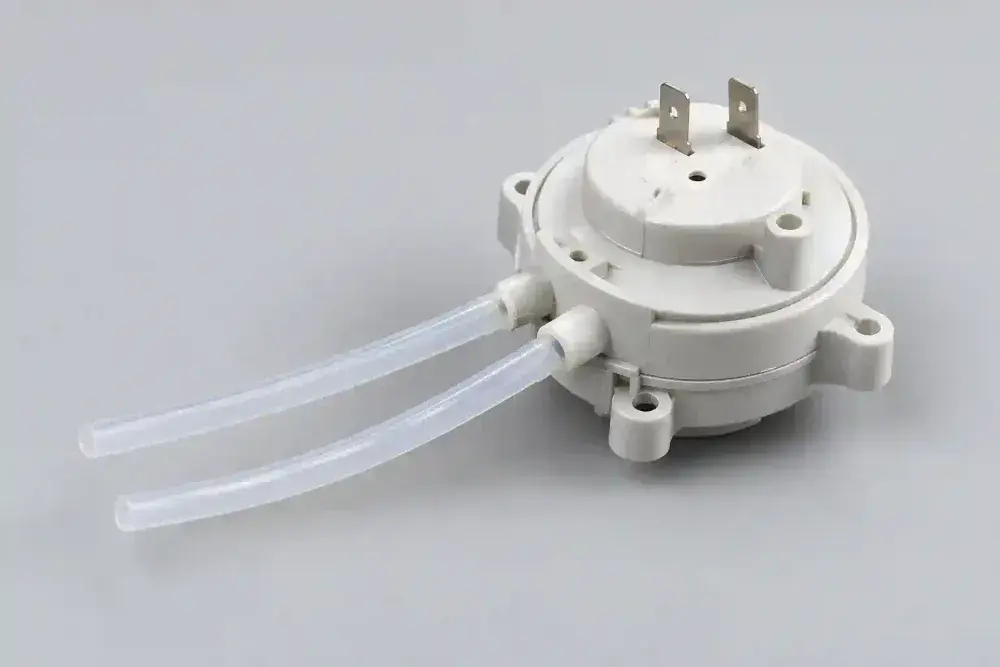
Troubleshooting a boiler air pressure switch fault is one of the most critical diagnostic procedures in room-sealed, fan-assisted combi heating appliances. A boiler air pressure switch monitors static differential pressure drops generated across the fan venturi nozzle in Pascals, confirming that toxic combustion gases evacuate before the burner ignites. If this differential signal fails to close during the pre-purge sequence, the appliance suppresses gas valve actuation, eliminating the risk of carbon monoxide accumulation within domestic spaces. During cold winter months, combustion air proving failures represent the primary cause of sudden heating shutdowns, manifesting as persistent error codes such as E03, 40-60-80, or general exhaust lockouts. Determining whether a lockout stems from an internal microswitch failure, a thermally distorted venturi, or condensation trapped inside silicone impulse hoses prevents improper part replacements. This practical service guide explores venturi dynamics, impulse hose maintenance, and structured electrical testing.
The Combustion Pre-Purge Sequence and Air Switch Timing
The safety ignition sequence in room-sealed combi appliances follows a precise electromechanical timeline: Exhaust fan motor startup: Upon domestic hot-water or heating demand, the control board energizes the fan relay, bringing the impeller to rated operational RPM. Pre-purge ventilation: The spinning fan sweeps residual flue gases out of the sealed chamber, drawing in fresh air. Venturi hydrodynamic depression: High-velocity exhaust gases traversing the constricted throat of the plastic venturi create localized static pressure drops based on the Bernoulli theorem. Differential pressure transfer: Flexible silicone hoses transmit this vacuum directly to the negative port of the air pressure switch. Contact closure and ignition authorization: Once differential pressure overcomes the internal calibration spring, the diaphragm closes the microswitch contacts, signaling the control board that combustion ventilation is safe. If the contact fails to close within a calibrated window—typically 5 to 10 seconds after fan startup—the microprocessor aborts the cycle, locking out the gas valve.
Pressure Calibration Thresholds in Pascals
Air pressure switches operate under microscopic pressure differentials calibrated strictly in Pascals or fractions of a millibar. Critical values stamped on the housing include: Cut-in actuation threshold: The exact differential pressure required to close the contact, standardizing at values such as 60, 70, 85, or 100 Pascals. Cut-out reset differential: The lower pressure threshold where internal springs restore the open contact state, such as 45, 50, or 70 Pascals. Pneumatic hysteresis: The designed difference between cut-in and cut-out values that prevents rapid contact bouncing caused by outdoor wind gusts. Venturi matching: The specific static depression developed by the fan nozzle at rated voltage and flue chimney lengths. At OJAA Industrial Group testing laboratories in Abbasabad Industrial Estate, diaphragm elastomeric fatigue and contact resistance stability under cyclic thermal drafts proved vital to preventing microswitch chatter during sustained burner firing.
Root Causes of Air Proving Failures Beyond Switch Breakdown
In over 70 percent of field service callbacks, the air pressure switch itself is mechanically functional, with external factors starving the loop of differential pressure: Thermally warped or melted venturi nozzles: High combustion temperatures soften and deform plastic venturi tubes, destroying the hydrodynamic vacuum profile. Condensation water trapped in silicone tubing: Flue gas moisture condenses inside cold silicone impulse hoses, creating fluid slugs that block pressure transmission. Flue chimney restrictions: Bird nests, falling mortar, debris, or external ice accumulation across concentric terminals restrict exhaust flow. Degraded fan motor run capacitors: A failing capacitor reduces motor RPM, preventing the impeller from generating sufficient differential velocity. Dust clogging the venturi port: Fine soot and particulate matter accumulate inside the negative pressure orifice, restricting airflow.
Common Diagnostic Error Codes in Domestic Heating
When an air switch circuit fails to close during pre-purge sequences, dedicated diagnostic codes appear: Iran Radiator combi boilers: Flashing LEDs 40-60-70 indicate an open air switch loop, while error 40-60-80 confirms the fan is running but the air switch failed to close. Butane digital appliances (Perla Pro, Parma, Bita): Fault code E03 directly indicates an exhaust flue or air proving lockout. Lorch combi boilers: Error code E05 indicating a combustion circuit and ventilation failure. Ferroli and Ariston platforms: Error F33 on Ferroli appliances and dedicated exhaust proving lockouts on Ariston digital displays.
Step-by-Step Workshop Diagnostics and Testing Procedures
To isolate faults systematically, follow this multi-stage testing procedure: Step 1: Physical inspection of impulse hoses and venturi Power down the appliance and remove the sealed combustion cover. Inspect the silicone tubing for condensation water droplets; if present, disconnect the hoses and blow them clear. Inspect the fan venturi nozzle using a mirror or flashlight to ensure the plastic cone is completely straight, smooth, and free from thermal distortion. Step 2: Static microswitch verification in the unpowered state Disconnect wiring leads from the air switch. Set the digital multimeter to continuity buzzer mode. Across two-terminal models, the circuit must measure completely open with no audible tone. If continuity sounds while the fan is dormant, the internal contacts have welded shut and the switch must be replaced. Step 3: Controlled vacuum simulation using a syringe Connect a short length of clean silicone tubing to the negative (-) port of the air switch, leaving the positive port open to atmosphere. Attach a needleless plastic syringe to the hose. While monitoring multimeter leads across the switch terminals, draw the syringe plunger outward very gently. An audible mechanical click should sound, triggering an immediate continuity tone with resistance near zero ohms. Step 4: Dynamic voltage verification under live fan operation Reattach silicone hoses to the venturi and restore power. With the fan spinning, measure direct-current voltage across the switch terminals using back-probing needles; as the switch closes, voltage across the contacts must drop to zero volts, confirming full circuit continuity.
The Lethal Dangers of Bypassing Air Pressure Switches
Jumpering, bridging, or permanently wiring across air pressure switch leads is an illegal and extremely dangerous practice. The air pressure switch is the primary fail-safe mechanism confirming that toxic, odorless, and colorless carbon monoxide gas evacuates outdoors. If a fan motor fails or a chimney becomes obstructed while the switch is jumpered, the burner continues firing inside an oxygen-starved chamber, producing lethal volumes of carbon monoxide that spill into living spaces. This safety device must never be bypassed under any circumstances.
Technician Evaluation Checklist for Replacement
When sourcing a replacement boiler air pressure switch, verify these technical factors: Differential pressure rating matching: Match exact actuation and release thresholds in Pascals (such as 60/45 Pa or 70/50 Pa) stamped on the casing. Pneumatic port configuration: Confirm single-hose vacuum setups versus dual-hose differential pressure ports. Electrical microswitch pinout: Verify two-terminal SPST or three-terminal SPDT configurations with Normally Closed leads. Chassis mounting geometry: Match round metal housings or square polymer brackets to chassis mounting points. Silicone hose renewal: Replace stiff or discolored impulse hoses with fresh, heat-resistant silicone tubing free from kinks or splits.
Final Summary
A boiler air pressure switch provides indispensable fail-safe protection across combi boiler combustion loops. Understanding differential pressure mechanics in Pascals, recognizing venturi degradation, and checking for condensation blockages prevents misdiagnosis. Executing disciplined multimeter continuity tests and completely rejecting dangerous bypass shortcuts ensures uncompromised combustion ventilation and protects occupant safety.