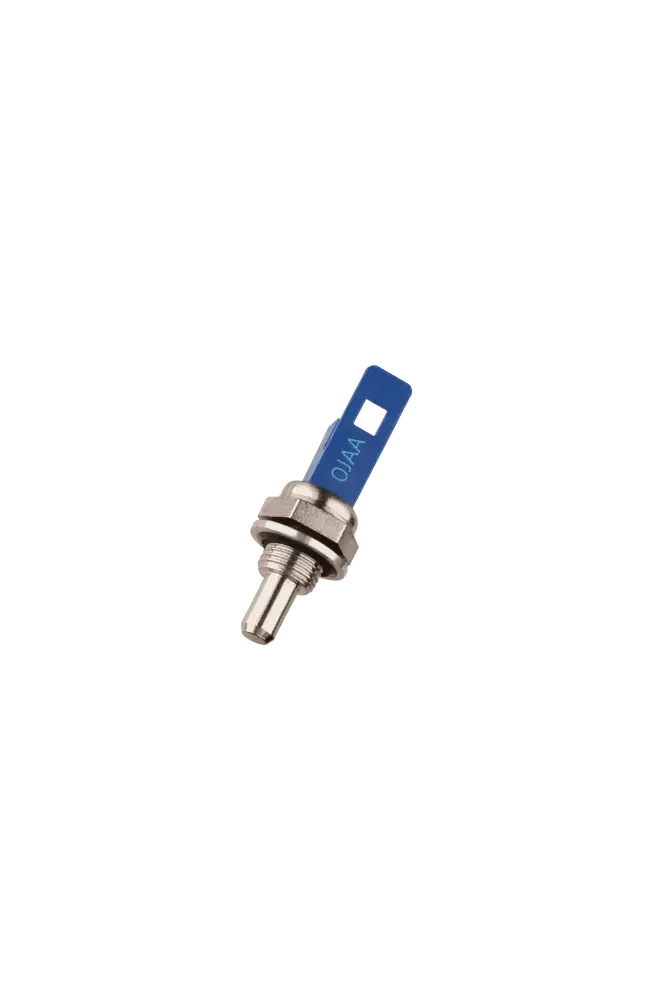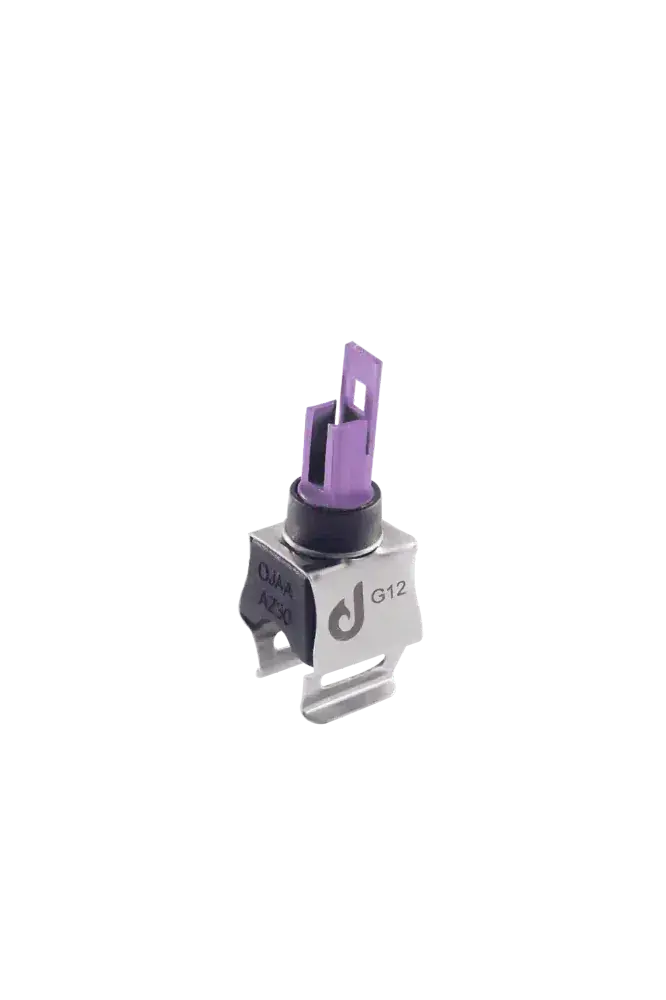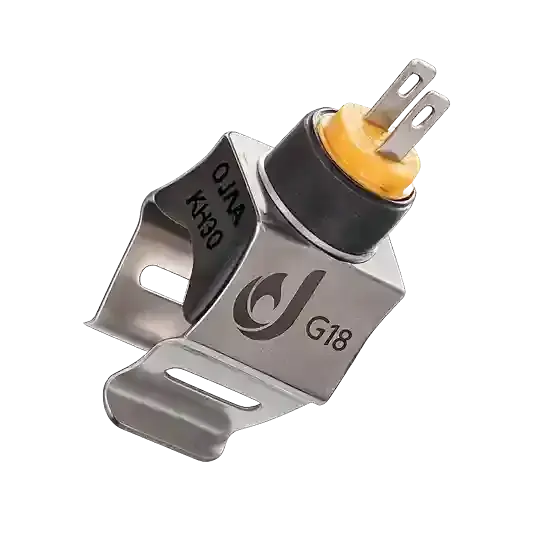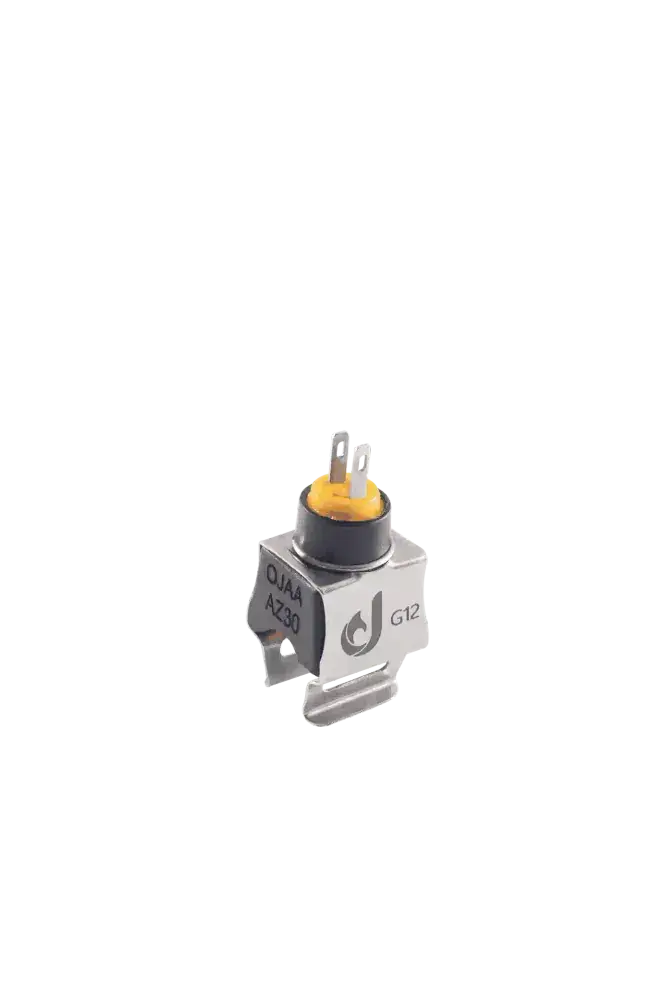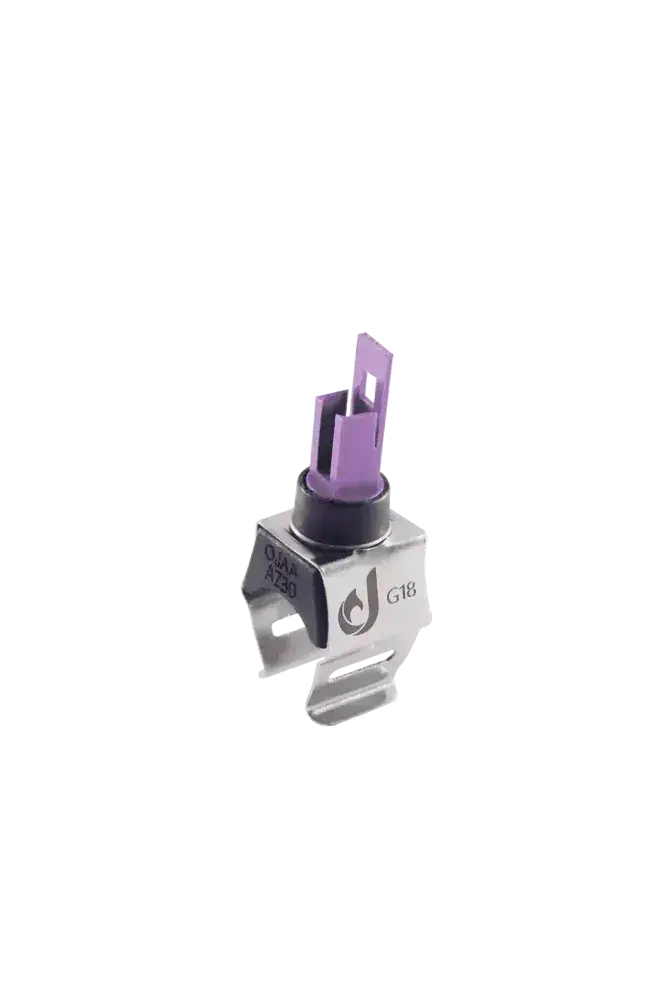
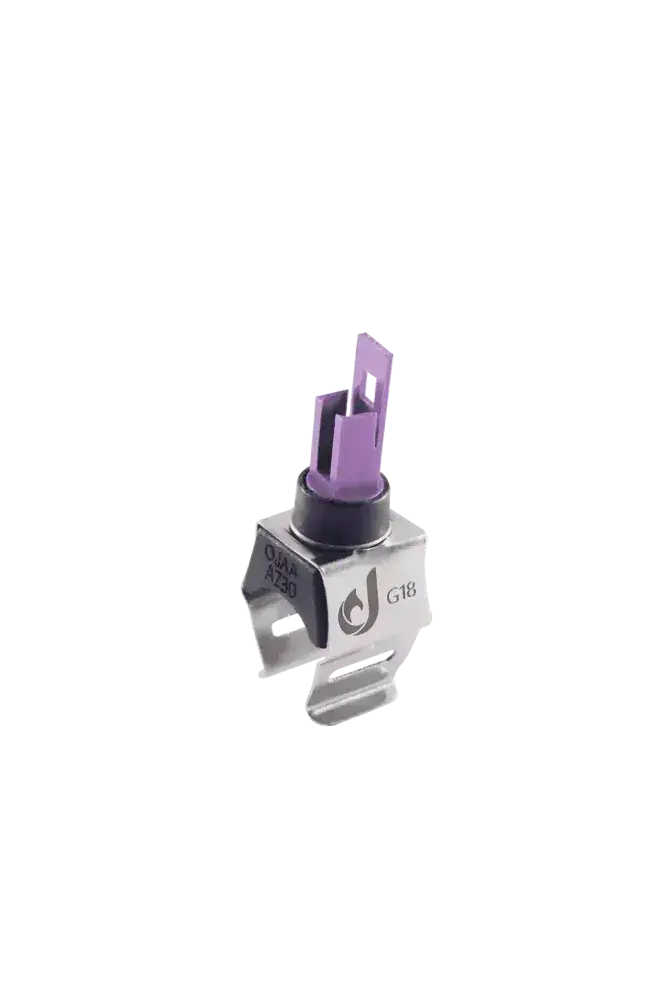
Understanding the technical difference between a boiler NTC socket vs. spade connector is a vital diagnostic skill in combi boiler maintenance. The distinction between a boiler NTC socket vs. spade connector involves electrical connection stability, vibration resistance, and compatibility with the boiler control board voltage-divider circuit. Both styles operate as pipe-mounted clip-on temperature sensors across central heating and domestic hot-water circuits, but their terminal architecture and mechanical clamping geometry determine long-term operational reliability. A frequent error during service calls is assuming that any thermistor rated at 10K is automatically interchangeable regardless of connector type. Splicing wiring harnesses or forcing mismatched spade terminals onto socket leads without verifying the ceramic Beta coefficient and pipe diameter causes erratic hot-water temperatures, primary overheating, or recurring diagnostic fault codes. This engineering guide examines terminal characteristics, thermal transfer principles, and structured multimeter testing methods.
Operating Principles of Clip-On Pipe NTC Thermistors
An NTC thermistor is a ceramic semiconductor device possessing a negative temperature coefficient. As thermal energy increases, electrons transition into the conduction band, causing electrical resistance to drop along a non-linear logarithmic curve. The boiler control board feeds a regulated direct-current reference voltage—typically 5. 0V DC—into a voltage divider circuit. By measuring the analog voltage drop across the thermistor terminals, the firmware references stored lookup tables to determine instantaneous water temperature inside the copper conduit. Unlike immersion sensors whose sensing probes make direct contact with circulating water, a clip-on NTC mounts externally against the exterior wall of the copper pipe. Thermal conduction occurs across an electroplated brass or copper contact shoe. Consequently, mechanical clamping force, contact surface area, and freedom from pipe corrosion directly govern temperature reading accuracy and transient response time.
Characteristics of Socket-Connected Boiler NTC Sensors
Socket-connected NTC thermistors interface with the appliance wiring loom through an integrated, polarized plastic connector body. The connector includes latching tabs that prevent accidental disengagement caused by pump vibration or combustion chamber drafts.
- Fast and mistake-proof servicing: Removing and installing a socket sensor during maintenance is instantaneous, eliminating the risk of miswiring individual leads.
- Environmental ingress protection: The molded shroud shields internal electrical terminals from condensation, moisture drips, and atmospheric oxidation.
- Consistent contact resistance: Sealed internal spring pins maintain stable contact pressure, avoiding resistance shifts caused by terminal fretting or surface corrosion.
In manufacturing operations at OJAA Industrial Group located in Abbasabad Industrial Estate, socket clip-on models are engineered across standard pipe diameters, including the OJ-G-18 variant for 3/4-inch copper piping and the OJ-G-12 variant for 1/2-inch conduits.
Characteristics of Spade-Connected Boiler NTC Sensors
Spade-type NTC sensors, also designated as blade or Faston terminal thermistors, feature two exposed flat metal tabs measuring standard widths such as 2. 8 mm or 4. 8 mm. The boiler wiring harness terminates in individual insulated female spade push-on terminals that press directly onto these blades.
- Compact packaging: The absence of a bulky plastic socket housing enables spade sensors to fit into constricted hydroblock clearances within compact chassis layouts.
- Universal field wiring interface: In older boilers where harness sockets have suffered thermal embrittlement or melting, spade terminals provide a direct mechanical connection.
- Vulnerability to terminal oxidation: Bare brass or nickel-plated blades exposed to humid environments can develop surface oxide films, adding uncalibrated contact resistance that distorts temperature measurements.
Within the OJAA component lineup, spade-type variants include models OJ-18 and OJ-12, built with high-tensile stainless steel mounting clips.
Engineering Comparison: Socket vs. Spade NTC Sensors
A technical comparison between these two sensor formats encompasses several parameters:
- Electrical terminal design: Socket configurations utilize a single polarized multi-pin housing; spade formats feature two independent flat metallic blades.
- Environmental seal: Socket variants provide enhanced shielding against moisture ingress; spade terminals remain vulnerable to water drops and atmospheric corrosion.
- Nominal resistance independence: The connection format does not dictate internal resistance; both styles are produced in 10 kΩ, 50 kΩ, or custom values.
- Thermal response curve: Material Beta constants and logarithmic curves depend solely on internal ceramic chemistry, independent of external terminal shapes.
- Maintenance workflow: Sockets disconnect as a single assembly without hand tools, whereas spade terminals require pulling individual leads carefully to avoid bending contact blades.
Why a 10K Rating Alone Does Not Guarantee Compatibility
One of the most frequent errors in boiler servicing is relying entirely on the 10K designation. A 10K rating specifies electrical resistance exclusively at a calibrated reference temperature of 25°C. Combi boilers, however, operate continuously across thermal ranges extending from 40°C to 85°C. Resistance behavior across higher temperatures is governed by the sensitivity constant known as the Beta value. For instance, two distinct thermistors measuring exactly 10. 0 kΩ at 25°C may feature Beta constants of 3435 K and 3977 K respectively. If an incompatible Beta constant is installed, resistance tracks accurately at room temperature but diverges significantly as the heating circuit warms up. The control board misinterprets the true heat level, leading to scalding domestic water, unmodulated burner firing, or primary heat exchanger over-temperature lockouts.
Importance of Clip Sizing in Surface Temperature Transfer
Model designators such as G12 and G18 represent the nominal diameter of the pipe contact clip. G12 accommodates 1/2-inch outer diameter tubing, while G18 fits 3/4-inch lines. Installing an oversized G18 clip on a smaller pipe results in loose mechanical seating. The resulting air gap acts as an insulation barrier, delaying thermal conduction to the sensor shoe. The boiler water may reach boiling point before the sensor detects high temperature, triggering manual-reset high-limit thermostats. Conversely, forcing an undersized G12 clip onto a heavy-gauge pipe deforms the spring steel, fracturing plastic structural tabs over time.
Step-by-Step Multimeter Diagnostics for Boiler NTC Sensors
To verify the health of a clip-on pipe thermistor, perform this diagnostic sequence:
- Appliance electrical isolation: Power down the combi boiler and disconnect mains power. Allow hydronic pipework to cool toward room temperature.
- Electrical disconnection: Unplug the socket harness or slip off both female spade terminals. Never attempt in-circuit resistance measurements while the sensor is wired to the control board.
- Multimeter calibration: Set the digital multimeter to the resistance scale on the 20 kΩ or 200 kΩ range.
- Reference baseline measurement: Connect multimeter test leads across the two sensor pins. Simultaneously record ambient air temperature with an external thermometer. At approximately 25°C, the reading should register within factory tolerance of 10 kΩ.
- Dynamic thermal excitation: Hold the metallic contact shoe firmly between warm fingers or apply gentle, indirect warm air.
- Real-time resistance observation: As temperature rises, displayed resistance must decrease smoothly and logarithmically without jumping, dropping to zero, or fluctuating erratically.
- Thermal relaxation check: Release the sensor; the resistance reading must steadily climb back toward the initial ambient baseline.
Infinite resistance indicates an open-circuit failure, zero ohms reveals an internal short, and irregular numerical spikes signify internal ceramic fractures requiring sensor replacement.
Can a Socket NTC Be Converted to a Spade Connection?
Converting terminal styles in the field is technically feasible as an emergency measure only if electrical parameters match perfectly, though factory-original replacement remains the standard recommendation. Before modifying connections, technicians must verify:
- Nominal 25°C resistance and the thermal Beta constant match the original component specification exactly.
- Clamping clip diameter fits the copper conduit tightly without physical deformation.
- New female spade connectors are crimped using calibrated ratcheting crimpers and protected with heat-shrink insulation.
- Wiring harnesses are secured away from high-temperature exhaust paths and sharp chassis flanges.
Retaining the original equipment socket configuration remains superior, preserving terminal polarization and preventing moisture contamination.
Technician Evaluation Checklist for NTC Selection
When selecting a replacement clip-on boiler thermistor, verify these operational factors:
- Sensor mounting configuration: Confirm surface clip-on architecture rather than threaded wet-well immersion models.
- Mechanical conduit sizing: Match G12 or G18 spring clip curvature precisely to the pipe outside diameter.
- Electrical interface compatibility: Match polarized multi-pin socket headers or flat blade terminals.
- Reference nominal resistance: Verify 10 kΩ rating at 25°C per appliance technical documentation.
- Beta sensitivity coefficient: Ensure compatibility between the sensor logarithmic curve and control board firmware.
- Pipe contact surface condition: Clean copper surfaces to remove tarnish, mineral scale, or paint before clipping the sensor into place.
Final Summary
The difference between socket-connected and spade-connected boiler NTC sensors defines mechanical connection integrity and environmental durability. A 10K rating represents only a single point on a complex thermal curve; ensuring complete operational harmony requires matching the Beta constant, pipe clip dimensions, and control circuit specifications. Rigorous multimeter diagnostics correlated with ambient temperature ensure accurate fault isolation, protecting the appliance from persistent heating anomalies.