
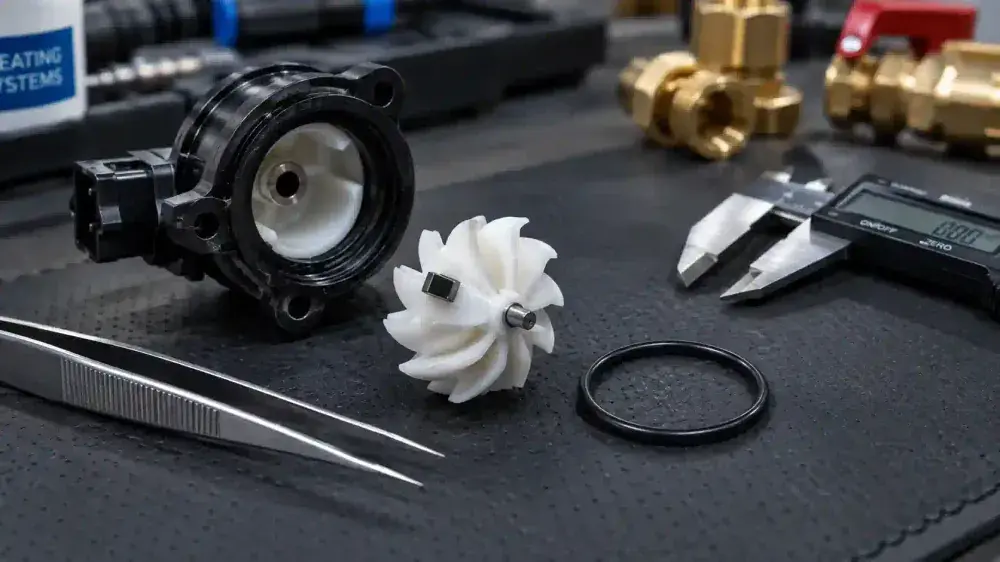
A boiler flow meter impeller functions as the physical hydrodynamic engine of domestic hot-water flow monitoring in modern wall-hung combi appliances. A boiler flow meter impeller converts the fluid kinetic energy of incoming mains water into rotational motion, sweeping embedded permanent magnets past a stationary Hall-effect sensor to quantify water flow in real time. If this miniature turbine wheel jams, cracks, or suffers bearing seizure, the boiler receives zero frequency pulses, suppressing gas burner ignition and leaving domestic water completely cold despite active tap draw. During maintenance calls, field technicians frequently replace expensive printed circuit boards or complete hydroblocks unnecessarily. In practice, the root cause is almost always particulate debris, pipework scale, or shredded thread sealant physically wedging the turbine blades. Replacing or servicing the compact impeller cartridge restores factory flow response at minimal cost without disturbing major plumbing manifolds. This engineering guide examines impeller fluid dynamics, clinical jamming symptoms, safe descaling techniques, and cartridge replacement protocols.
Operating Mechanics of Combi Boiler Flow Meter Impellers
A boiler flow meter impeller comprises a high-precision multi-bladed rotor molded from dimensionally stable, low-friction polymers such as polyoxymethylene (POM) or polyphenylene oxide (PPO). The rotor spins on a highly polished ceramic or high-grade stainless-steel center spindle supported by low-drag composite journal bushings. The blade angles are hydrodynamically optimized to overcome starting torque at flow rates as low as 1. 5 to 2. 0 liters per minute. Hermetically sealed inside one or two opposing turbine blades are miniature permanent neodymium (NdFeB) magnets. As fluid velocity drives the rotor, these magnetic poles sweep past the external Hall-effect sensor on the hydroblock casing. The rotational frequency of the impeller corresponds linearly with volumetric fluid velocity. Tight axial clearances and balanced blade pitch ensure stable, unhindered rotation across high and low domestic water pressures. At OJAA Industrial Group manufacturing facilities in Abbasabad Industrial Estate, impeller dynamic balance, spindle concentricity, and magnetic flux encapsulation undergo rigorous hydrodynamic flow tests to eliminate rotational vibration and acoustic whistling within consumer plumbing lines.
Clinical Symptoms of a Jammed or Fractured Flow Meter Impeller
A compromised turbine impeller generates distinct operational anomalies across domestic hot-water delivery: Inactive boiler during domestic tap draw: Hot-water taps run at full volume, but no turbine rotation occurs, the burner does not ignite, and no tap icon illuminates on the appliance interface. High-pitched whistling or rattling noises from the hydroblock: Damaged spindle bushings or particulate grit trapped against the impeller generate loud mechanical noises during active water draw. Severe shower temperature hunting: A fractured turbine blade or uneven magnetic poles disrupt rotational balance, sending erratic frequency spikes that cause the gas valve to hunt continuously. Boiler ignites only upon mechanical tapping: Tapping the boiler hydroblock frees a sticking turbine temporarily, allowing the appliance to fire briefly before the rotor seizes again. High activation threshold requirements: The boiler refuses to fire during normal single-tap usage, igniting only when multiple fixtures are opened simultaneously to force a seized impeller into motion.
Root Causes of Impeller Jamming and Mechanical Failure
Several external plumbing conditions induce premature turbine breakdown: Pipework debris and loose PTFE shreds: In newly commissioned plumbing, solder beads, copper filings, and shredded thread sealant pass into the hydroblock and wedge between the rotor blades and casing wall. Mineral limescale encrustation: Hard water supplies precipitate calcium carbonate layers across the ceramic spindle, increasing rotational friction until the impeller stalls completely. Upstream filter strainer failure: A missing or ruptured stainless-steel inlet mesh strainer allows coarse sand and grit to strike the turbine blades directly, shearing plastic fins. Internal magnet swelling and oxidation: In aggressive municipal water supplies, micro-cracks in the polymer blade allow water to contact the internal neodymium magnet, causing it to oxidize, expand, and rub against the casing. Water hammer shockwaves: Fast-closing lever valves produce hydraulic shockwaves that hammer the turbine against its thrust bearings, fracturing spindle support pins.
Step-by-Step Workshop Diagnostics and Inspection
To evaluate impeller condition accurately, follow this structured physical inspection sequence: Step 1: Hydronic depressurization and safety Power down the combi boiler, isolate the domestic cold-water stopcock, and open the lowest domestic hot-water tap to drain residual water and dissipate line pressure completely. Step 2: Cartridge extraction Using needle-nose pliers, extract the stainless-steel retaining wire clip securing the flow meter insert. Withdraw the cartridge from the hydroblock using a gentle twisting motion to avoid snapping plastic alignment tabs. Step 3: Visual inspection of the blades and chamber Inspect the turbine under focused lighting. Check for pipework sand, debris, or PTFE tape wrapped around the rotor. Verify that all impeller blades are intact and crack-free. Step 4: Unhindered aerodynamic spin test Hold the cartridge up and blow gently through the fluid inlet port. A healthy, frictionless impeller must spin freely and instantly with low acoustic drag, producing a smooth whirring sound. If the rotor hesitates, requires forceful blowing, or stops abruptly, the spindle or bushings are encrusted or deformed. Step 5: Magnetic attraction verification Bring a miniature steel screwdriver tip near the blades; a distinct magnetic pull confirms that internal permanent magnets remain intact and active.
Safe Descaling and Chemical Restoration
When an impeller is mechanically sound but stalled by mineral scale: Submerge the extracted cartridge in a shallow bath of diluted sulfamic acid or warm technical white vinegar for no more than 10 minutes. Never soak the component in concentrated hydrochloric acid; aggressive acids degrade polymer structural bonds and corrode magnet nickel plating. Flush the cartridge thoroughly under running water, spin-test with gentle air, and verify zero spindle dragging before reinstallation.
Technician Evaluation Checklist for Cartridge Replacement
When sourcing a replacement combi boiler flow meter impeller, verify these parameters: Cartridge external dimensions: Confirm diameter, overall length, and guide tab positioning match hydroblock bores. Blade count and angular pitch: Verify identical blade geometry to preserve the factory K-factor pulse calibration on the control board. Spindle material integrity: Prioritize polished ceramic or 316 stainless-steel spindles for maximum wear resistance. Magnet flux retention: Confirm powerful magnetic attraction on brand-new replacement rotors before seating. Inlet strainer renewal: Always fit a new, intact stainless-steel mesh filter upstream to prevent recurrent debris jamming. Sealing O-ring replacement: Fit fresh WRAS-compliant EPDM O-rings lubricated with pure silicone grease around the cartridge perimeter.
Final Summary
A boiler flow meter impeller represents the vital mechanical link in combi boiler domestic hot-water regulation. Recognizing that hot-water ignition failures frequently originate from a stalled rotor rather than failed electronics saves significant diagnostic time and repair expense. Routine inspection of inlet strainers, gentle pneumatic spin-testing, and replacing encrusted cartridges restores rapid burner modulation and guarantees dependable domestic hot-water delivery.